TEMPO VERTICAL | Art Palma Summer
04.06 -- 11.09.2026
19.09 -- 13.11.2026 ART COLOGNE PALMA
09.04 -- 12.04.2026 SPINNING RUMOURS ÓPALO
21.03 -- 22.05.2026 ARCOmadrid 2026
04.03 --08.03.2026 UNTITLED ART MIAMI BEACH
02 - 07. 12. 2025 BAIT AND TACKLE
22.11.2025 –– 20.02.2026 EN FORMA | NIT DE L'ART
20.09 –– 14.11.2025 AÑO TRES | Art Palma Summer
05.06 –– 05.09.2025 Trazos y espacios | Art Palma Brunch
22.03 –– 30.05.2025 ARCOmadrid 2025
05.03 –– 09.03.2025 UNTITLED Art Fair Miami
04.12 –– 08.10.2024 FAIRY TALES
25.11.24 –– 24.01.25 SWAB ART FAIR 2024
03.10 –– 06.10 2024 GALAXY BALLROOM | NIT DE L'ART
21.09 - 15.11.2024 CAN ART FAIR IBIZA
26.06 - 30.06 2024 Space In Between | Art Palma Summer
06.06 –– 13.09.24 ARCOmadrid 2024
06.03 –– 10.03.24 ET FUGA | Art Palma Brunch
23.03 –– 31.05.24 MIENTRAS TU SUEÑAS
24.11.2023 –– 02.02.2024 SWAB Art Fair Barcelona (5-8 oct)
THE MELEE | NIT DE L'ART
23.09 ––10.11.2023 MALE MALE
23.06 ––15.09.2023 AMARILLO PÚRPURA - Art Palma Brunch 2023
25.03 –– 26.05 2023 True North
03.02 –– 17.03.2023 TERERÉ
11.11.22 –– 27.01.23 FLOOP
17.09 — 05.11.2022 Here We Go
09.07——02.09.2022
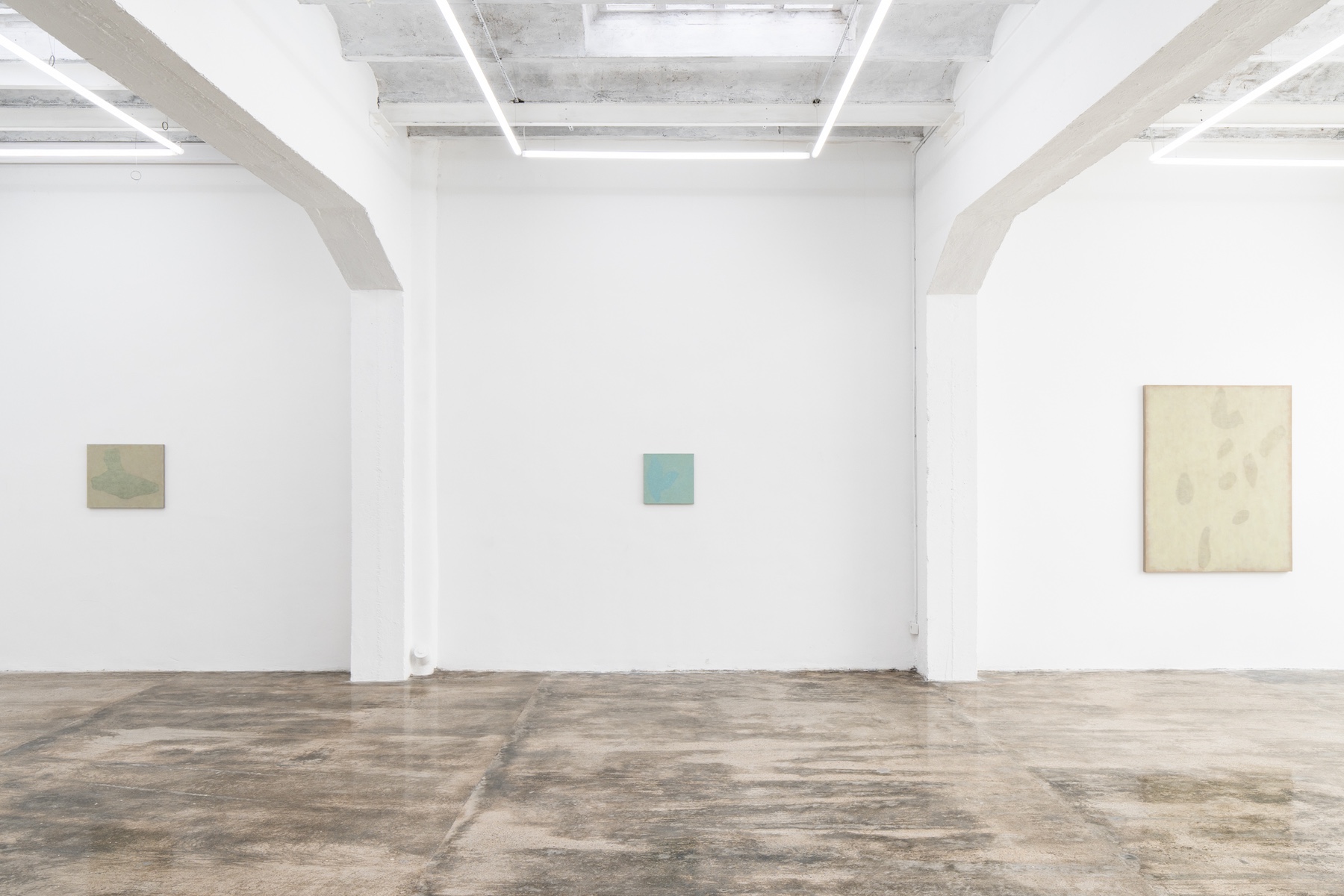
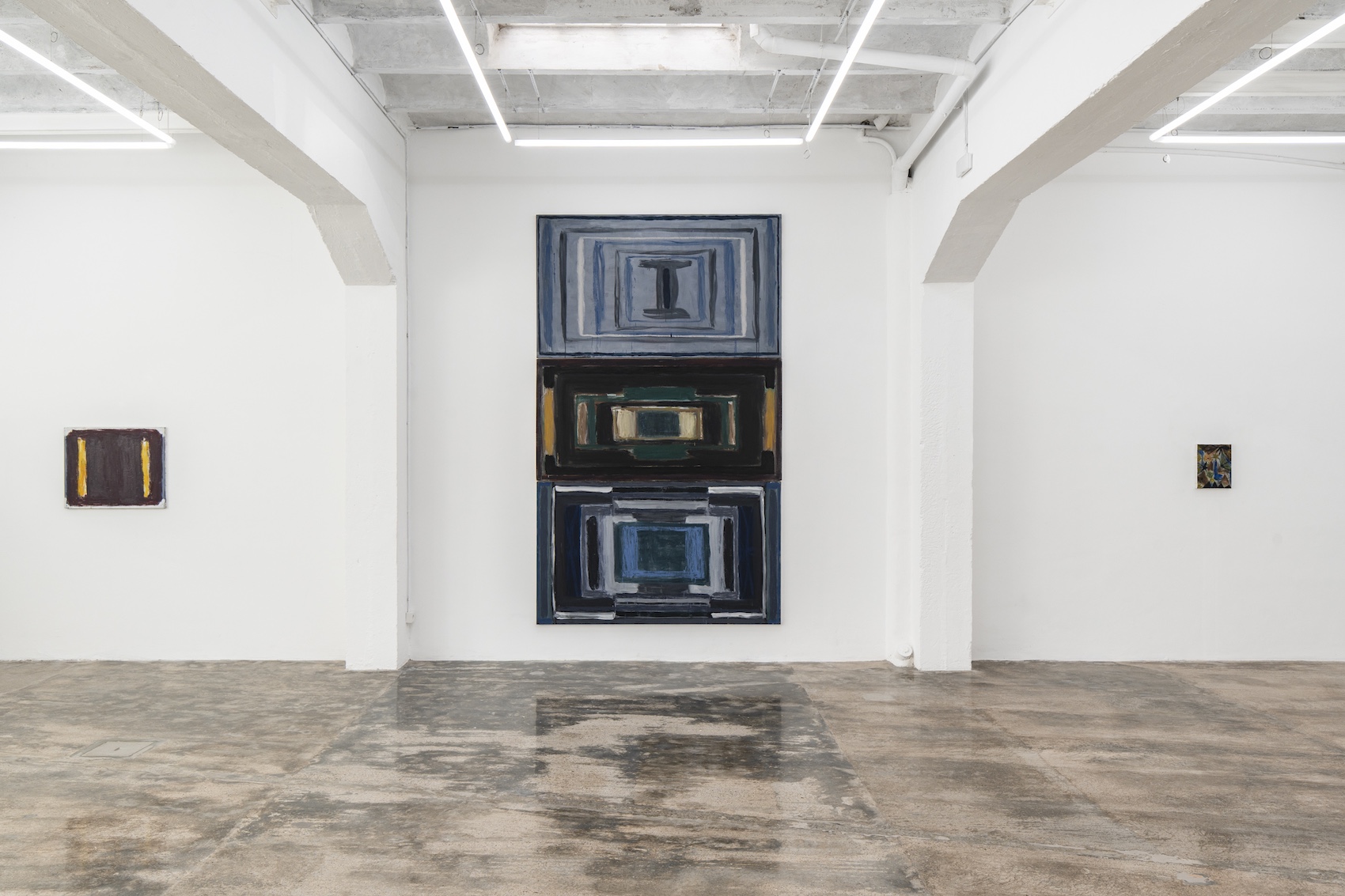
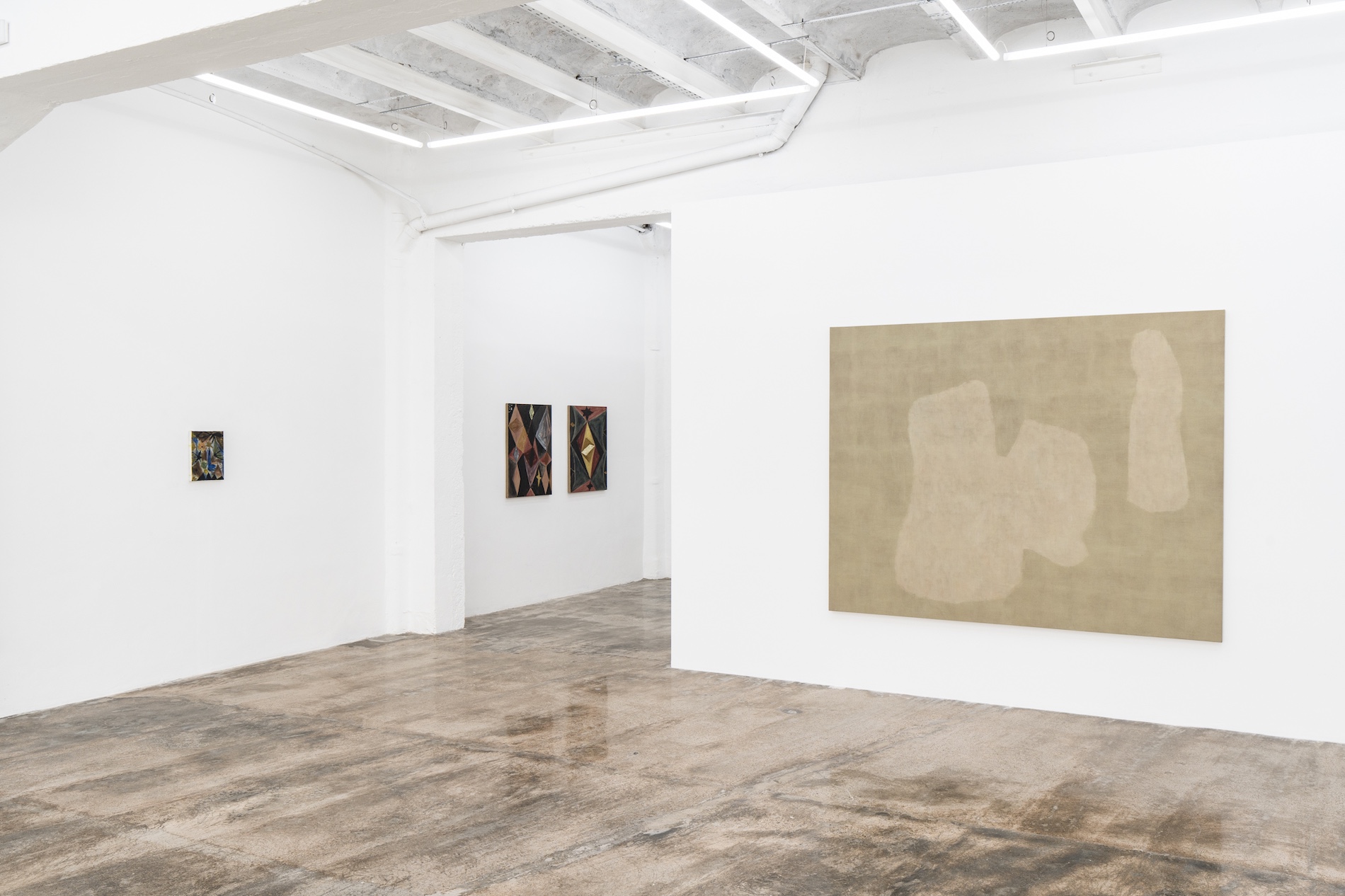
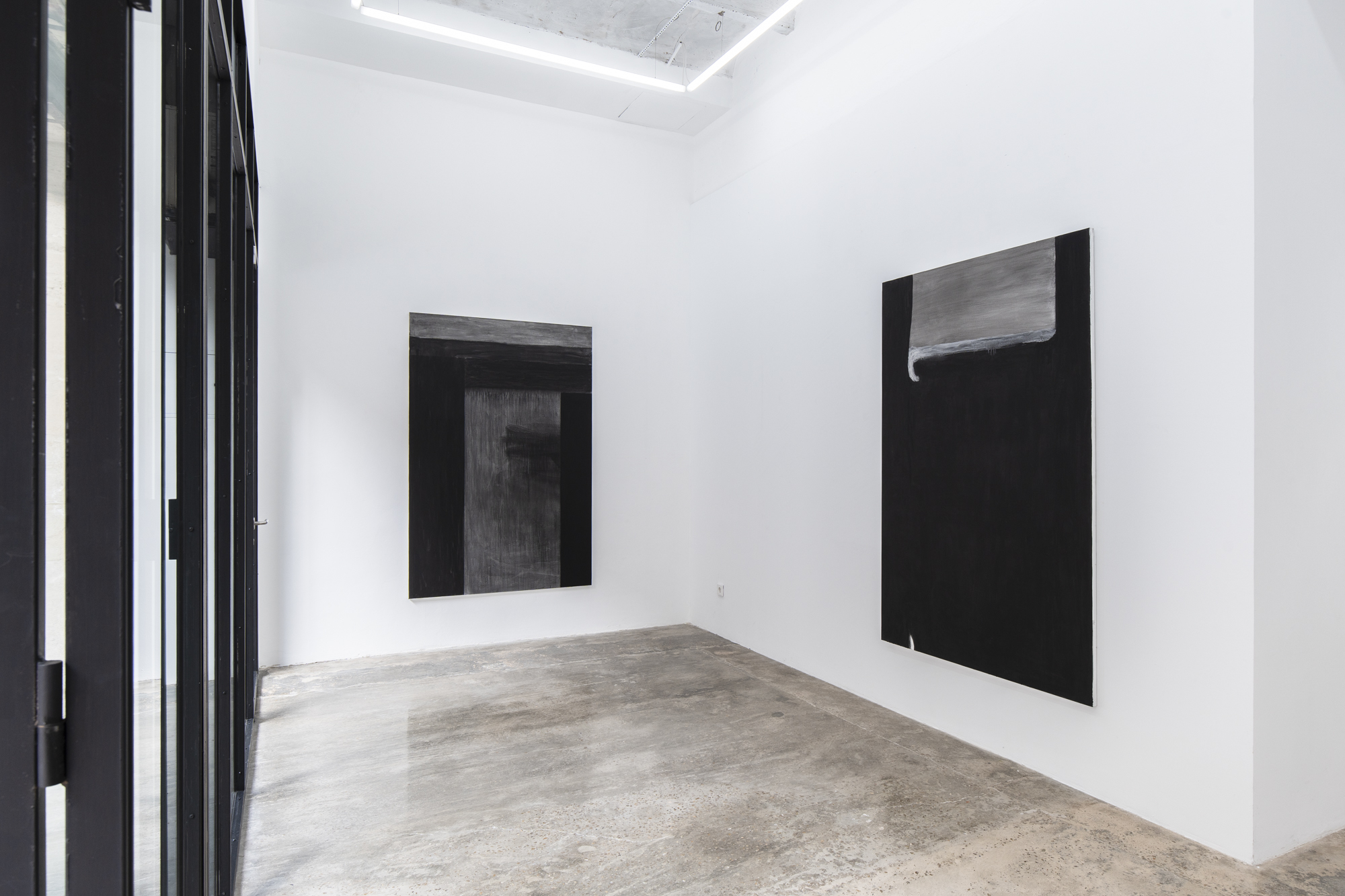
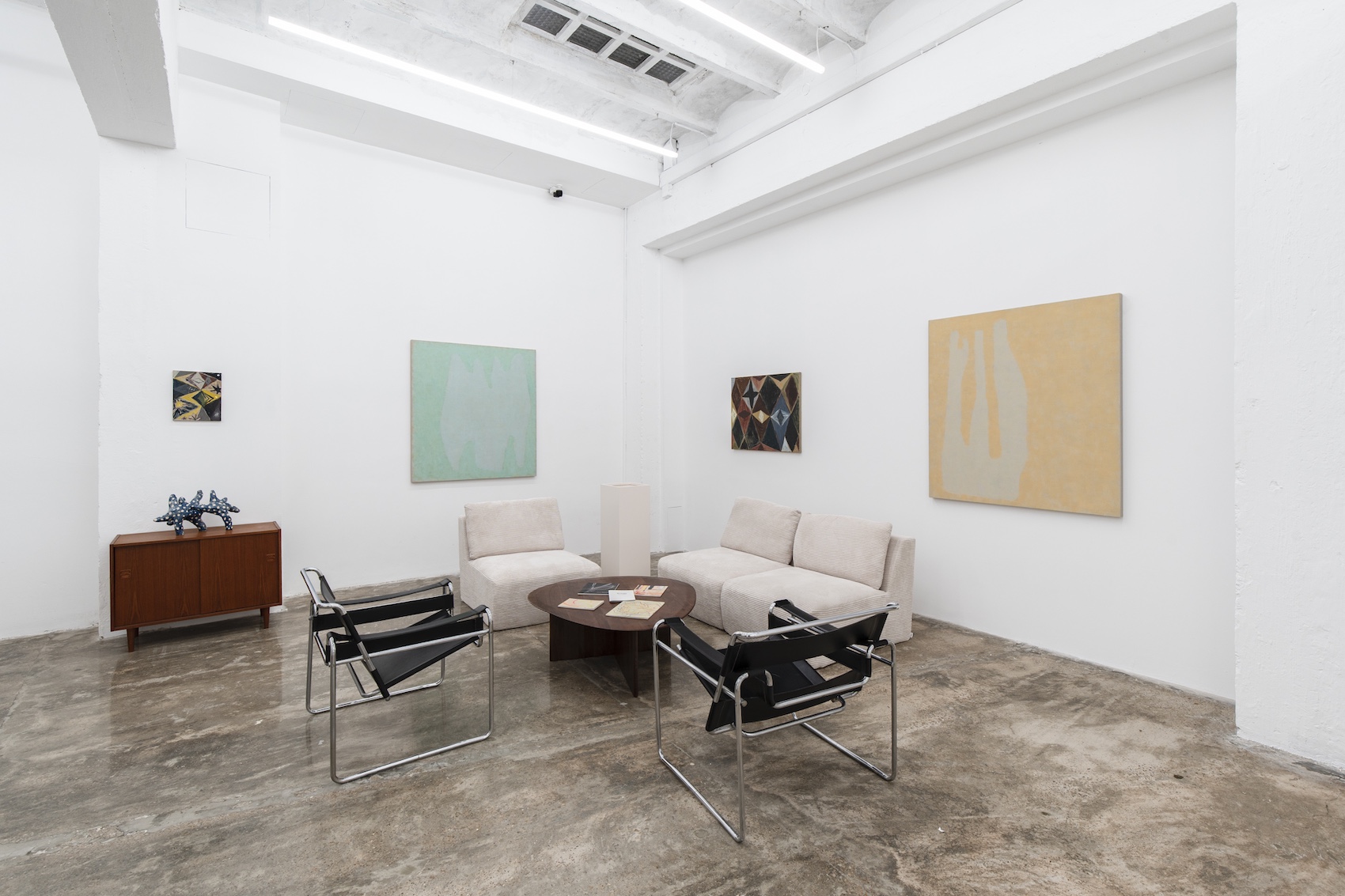
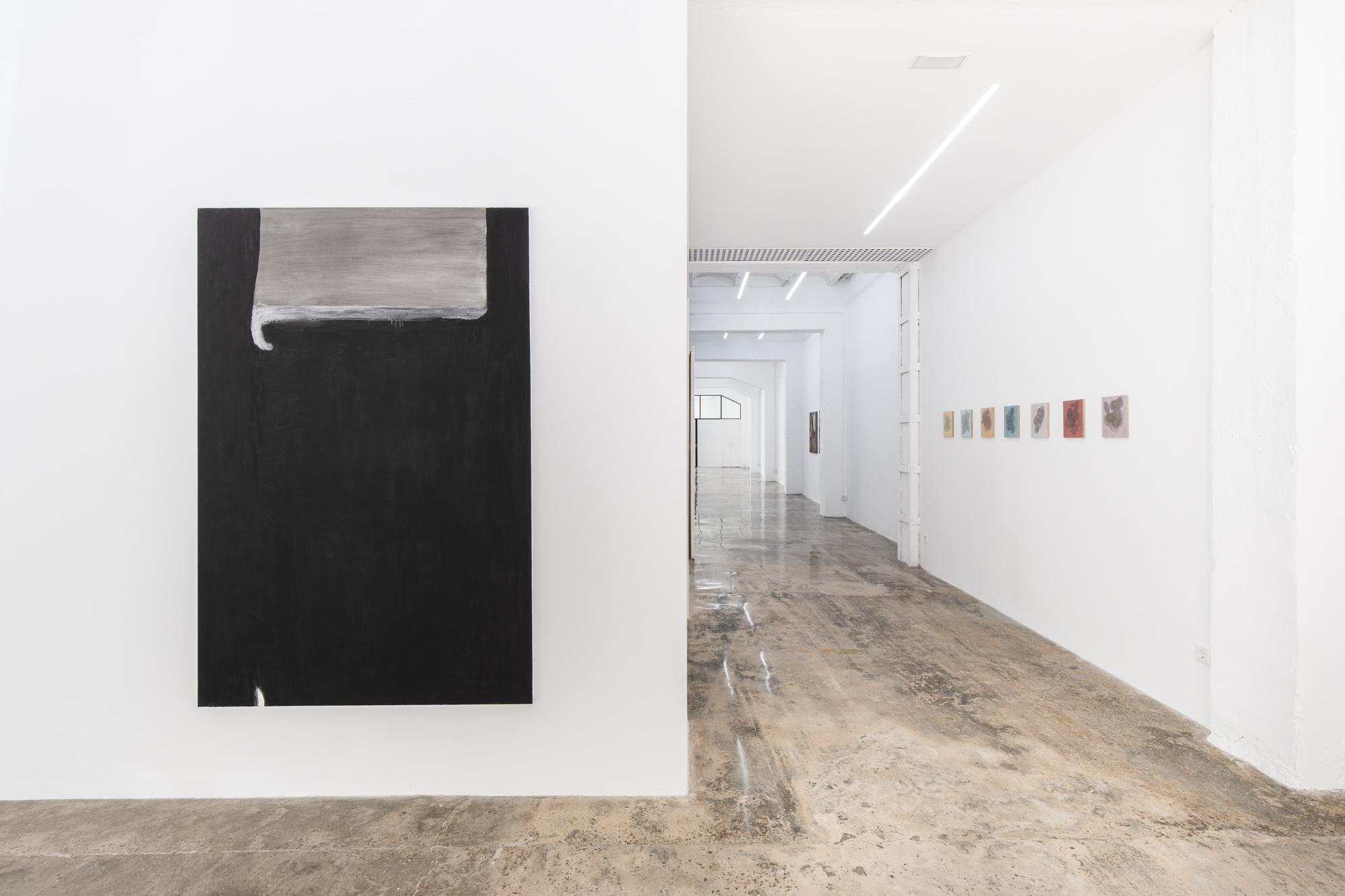
TEMPO VERTICAL. En el fondo del oído, una imagen.
Curatorial text: Claudia Rodríguez-Ponga
There is a disagreement between the audible and the visible: sound and image do not necessarily go together. In fact, what is unusual is for sound and image to be a single thing, or to translate effortlessly into one another. When this happens, we call it synesthesia, and it is considered exceptional. Perhaps, when we pay to attend a concert—paying more for seats with a good view—we do so not only for the quality of the live sound, but rather for the spectacle of making coincide what we see and what we hear.
“There is nothing in sound,” writes Pascal Quignard in his essays on music (1), “that returns us a locatable, symmetrical, inverted image of ourselves in the way a mirror does.” Indeed, it is often unsettling to hear ourselves: to feel completely dissociated from our own sound, as though it comes back to us almost like an echo, like someone else’s voice.
The nature of sound is to be invisible. That of painting is to be silent. In this circumstance lies both the great challenge, as well as the great power, of articulating these two worlds. Pascal Quignard speaks of the “shamanic pair” formed by hearing and sight: “the singer and the seer,” “the thunder and the lightning.” His text seems to suggest that both senses become more powerful when they conspire together.
Quignard suggests that, in fact, the first caves painted by humankind were precisely that: shamanic devices in which echo served both as a guide and a point of reference, ultimately leading to the discovery of images, accompanying them. He even goes as far as to suggest that images were painted in the places where reverberation was strongest.
This idea is diametrically opposed to the one conveyed by the classical myth of Echo and Narcissus, in which both sound and image fold back upon themselves. Sound returns to itself as echo, and the image as reflection. Between the two lies an irreconcilable—and deadly—abyss, for both Echo and Narcissus perish (2). The aforementioned painted/sung cave, however, speaks of a different dynamic. There, the visible and the audible play hide-and-seek with one another, as Quignard puts it.
The space that Eduardo and Alejandro bridge through their work is not, I believe, that of the abyss, but rather, that playful space of punctual misalignment and agreement. As in the compositions of Morton Feldman that inspire both painters (and before them others such as Mark Rothko), in these paintings there are apparitions and dim echoes, reverberations that make one stop and glimpse what, by its very nature, cannot be seen. To listen, but with the eyes.
The difficulty is that, for the game to be fair—and enjoyable—there must be a certain balance between the parts. Yet, as David Toop reminds us in his book about the sonic dimension of images (3), “in the history of Western thought, sight has been regarded as the most active sense, the king of the senses,” and, as a consequence, “vision has often been classified as masculine, while hearing has been considered feminine.” Within this framework, the image—so insistently masculine—may attempt to take possession of sound by illustrating it.
Fortunately, this is not what neither Eduardo nor Alejandro propose. Tools and strategies drawn from musical composition and attentive listening, are incorporated into the pictorial, turning it into an exercise that challenges the dichotomy between image and sound. These works do not travel horizontally across the visual and the auditory poles. Instead, the artists disregard such polarization altogether and, as an alternative, plunge vertically, like the Argonaut Butes, who, rather than resisting, dives into the sea in pursuit of the Sirens’ song. And unlike Narcissus, Butes does not die; he is rescued by Aphrodite, the goddess—and image—of beauty.
In music, verticality is associated with harmony and the structural overlaying of different notes, instruments, or voices, thus creating texture. In painting, we might associate verticality with a mode of looking that, rather than moving horizontally—discursively, narratively—turns inward, descending into depth, passing through layers with full respect for the existential texture they constitute. Eduardo and Alejandro choose this subjective tempo over the homogeneous measurement of linear time. In their work there is no a predetermined path, only variations from the same theme. They dive and emerge in such strange harmonies.
In Eduardo’s case, there is an analysis of structures and concepts produced by listening, that is later developed visually in the silence of the studio. Painting becomes another form of hearing, but also a way of interpreting those musical works, seeking to evoke in the viewer emotions similar to those experienced by the painter while listening to such music scores. And yet, the music is neither illustrated nor narrated.
Nor does this occur in Alejandro’s painterly practice, where the Orphic dimension of music takes precedence: his capacity to connect us with other latitudes and altitudes of being, with under and alternate worlds. The music that accompanies Alejandro’s painting serves as a vehicle for the invisible, appearing at the limit and questioning the all-too-obvious—and ultimately false—association that Western thought often makes between the tangible and the real…just like Alejandro’s painting.
The practice of both painters, their respective plunges and emergencies, create a flow of energy that is experienced as euphoria. They are synesthetic exercises that remind us that, as Oliver Sacks states in Musicophilia, as infants we all possess synesthetic abilities that most of us lose before adolescence. Abilities that our brain-body-psyche once had and may perhaps recall, however vaguely, through an artistic practice such as the ones proposed by Eduardo and Alejandro.
(1) Pascal Quignard’s “The Hatred of Music” was published in Spanish in 2020 by Cuenco de Plata.
(2) Luis Pérez-Oramas explains it wonderfully in a video available on YouTube that I recommend seeking out and watching.
(3) Among other things, this is what Resonancia siniestra by David Toop is about, published in Spanish in 2013 by Caja Negra Editora