SPINNING RUMOURS ÓPALO
21.03 -- 22.05.2026
19.09 -- 13.11.2026 TEMPO VERTICAL | Art Palma Summer
04.06 -- 11.09.2026 ART COLOGNE PALMA
09.04 -- 12.04.2026 ARCOmadrid 2026
04.03 --08.03.2026 UNTITLED ART MIAMI BEACH
02 - 07. 12. 2025 BAIT AND TACKLE
22.11.2025 –– 20.02.2026 EN FORMA | NIT DE L'ART
20.09 –– 14.11.2025 AÑO TRES | Art Palma Summer
05.06 –– 05.09.2025 Trazos y espacios | Art Palma Brunch
22.03 –– 30.05.2025 ARCOmadrid 2025
05.03 –– 09.03.2025 UNTITLED Art Fair Miami
04.12 –– 08.10.2024 FAIRY TALES
25.11.24 –– 24.01.25 SWAB ART FAIR 2024
03.10 –– 06.10 2024 GALAXY BALLROOM | NIT DE L'ART
21.09 - 15.11.2024 CAN ART FAIR IBIZA
26.06 - 30.06 2024 Space In Between | Art Palma Summer
06.06 –– 13.09.24 ARCOmadrid 2024
06.03 –– 10.03.24 ET FUGA | Art Palma Brunch
23.03 –– 31.05.24 MIENTRAS TU SUEÑAS
24.11.2023 –– 02.02.2024 SWAB Art Fair Barcelona (5-8 oct)
THE MELEE | NIT DE L'ART
23.09 ––10.11.2023 MALE MALE
23.06 ––15.09.2023 AMARILLO PÚRPURA - Art Palma Brunch 2023
25.03 –– 26.05 2023 True North
03.02 –– 17.03.2023 TERERÉ
11.11.22 –– 27.01.23 FLOOP
17.09 — 05.11.2022 Here We Go
09.07——02.09.2022
Galería Fermay is pleased to present ‘Spinning Rumours artist duo Carla Arocha and Stéphane Schraenen. Ópalo’, a solo exhibition by Antwerp-based. The original Latin term ignoramus significantly diverges from the current meaning associated with the word ignorant. While the former roughly translates as “someone who has not yet arrived to knowledge”, the modern version of it takes a rather pejorative stance referring most commonly to plain stupidity. The key difference between the two is that one refers to a static state of the mind while the other, quite differently, has an implicit sense of movement or tendency. Following this latter train of thought, knowledge seems to be in suspension, awaiting, and available for those who are willing to go for it.
The notion of truth has been a integral concept in all cultures since early times. In Ancient Greece, for instance, Plato equated the idea of truth with beauty. In the 20th century, German philosopher Martin Heidegger conveyed the idea of the truth as something that progressively reveals itself in existence. Later on, for Foucault, and the Post- Structuralists at large, the truth was eminently a social construct, a tool to exercise power. Although oversimplified, the above shows that throughout history there has indeed been a persistence, a great effort, to distil the very essence of the term, which in turn have given way to multiple and differentiated systems of beliefs. Science and Mathematics, furthermore, are build on the principle of truth (axioms, facts) that permits to establish an objective correspondence between thought and reality, thus advancing in an empirically-grounded understanding of the world.
The exhibition’s title, ‘Spinning Rumours Ópalo’, refers to a common expression used to point out the act of spreading misinformation with the intention of shaping the public opinion. There is an obvious tension in it —between what is supposed to be the truth and the effort to undermine it. While gossips and biased narratives have certainly been present in all types of societies, our 21st century age of overflowing digital technology seems to excel in it. The invention of the Internet brought with it the promise of real democracy, but it seems the exact opposite occurred. Paradoxically, a society that heavily relies on, produces and consumes an immense amount of data and information, finds itself increasingly unable to validate nor trust it. This should perhaps not come as a surprise since the overall design and functioning of technologies have always been implemented under social and political conditions that favours control and profit over freedom.
The speculative nature of Arocha’s and Schraenen’s artistic practice allows the artists to delve into such topics, almost inadvertently. More concisely, for this exhibition the artists take as a starting point of the opal stone, a quartz-like mineral characterised by its internal refractive light crystals. Culturally, the opal’s distinctive physical attributes, notably its glimmering colours, made of it a coveted object associated with many positive powers such as protection, creativity or purity. Throughout the centuries, however, its reputation has also been tarnished with negative views like misfortune, bad luck or even death. Such connotations have coexisted all along with something that is a fact —the chemical composition of this mineraloid being SiO2·nH2O (silicon dioxide and water). As a result, the opal unfolds both as a mineral with a set of physical qualities determined through scientific study and, at the same time, as a highly volatile value charged cultural artefact. Which definition prevails? Which of the two we choose to believe in? It is precisely this split that the artists choose to exploit; the unstable, and sometimes ambiguous, even contradictory, processes of creation of meaning by which societies, as well as individuals, interpret reality. The opal acts throughout the exhibition as a sustained motif that allows the artists to set forth a network of crossed references that build on such conceptual concerns as well as in their understanding of form and space.
Carla Arocha and Stéphane Schraenen began their artistic collaboration two decades ago, in 2005, when they had their first institutional exhibition at FRAC Auvergne, titled ‘Chris’. Their work is the result of a common effort and a shared vision that challenges perceptions of space, reflection and reality itself while also critically examines the illusions and complexities of contemporary visual culture. Their work usually materialises in context-specific installations made out of reflective materials aimed at altering a given space with the intention of exploring other possible realities or narratives. One direct consequence of such way of operating is a destabilisation, a disruption of an established logic, that results in the beholder feeling somehow confused, even disoriented. As Schraenen rightly points out, their exhibitions function as thinking machines, multi-layered propositions conceived as a whole, but made out of several independent pieces, that engage on a spacial, architectural, historical and emotional level. There is also a kind of exigency, an effort, that Arocha and Schraenen place on the viewer — that of having to conceptually and physically reposition itself constantly thus becoming an indispensable agent that completes the artworks.
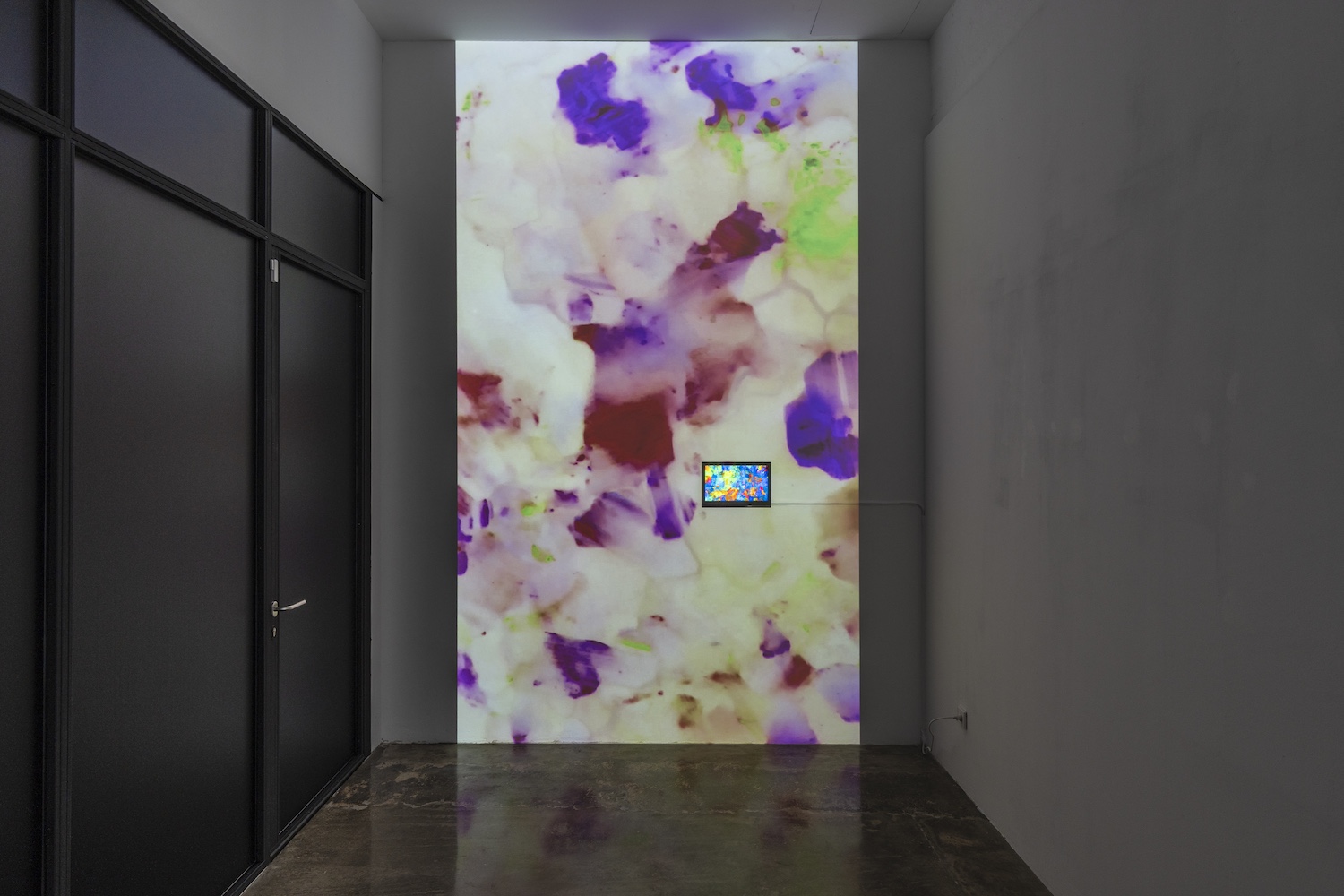
The exhibition starts with the gallery’s street glass windows completely black out thus preventing passerby’s from seeing what is indoors. Once inside, the artists invite the viewers to engage with the aforementioned thinking machine that build on their ongoing interest in perception, colour and light. In the front room there is Lumen Internum (2026), a large-scale vertical video projecting slow motion blown-up dissolving images of opals with the inverted color scheme. On top of it there is a small horizontal screen with the original video playing that very same image, which keeps pushing forward the idea of opposites and conceptual indeterminacy coexisting intertwined. The scale of the work and the powerful colour fields seem to incite the viewer to let themselves go in order to delve into the aesthetic propositions put forth by the artists.
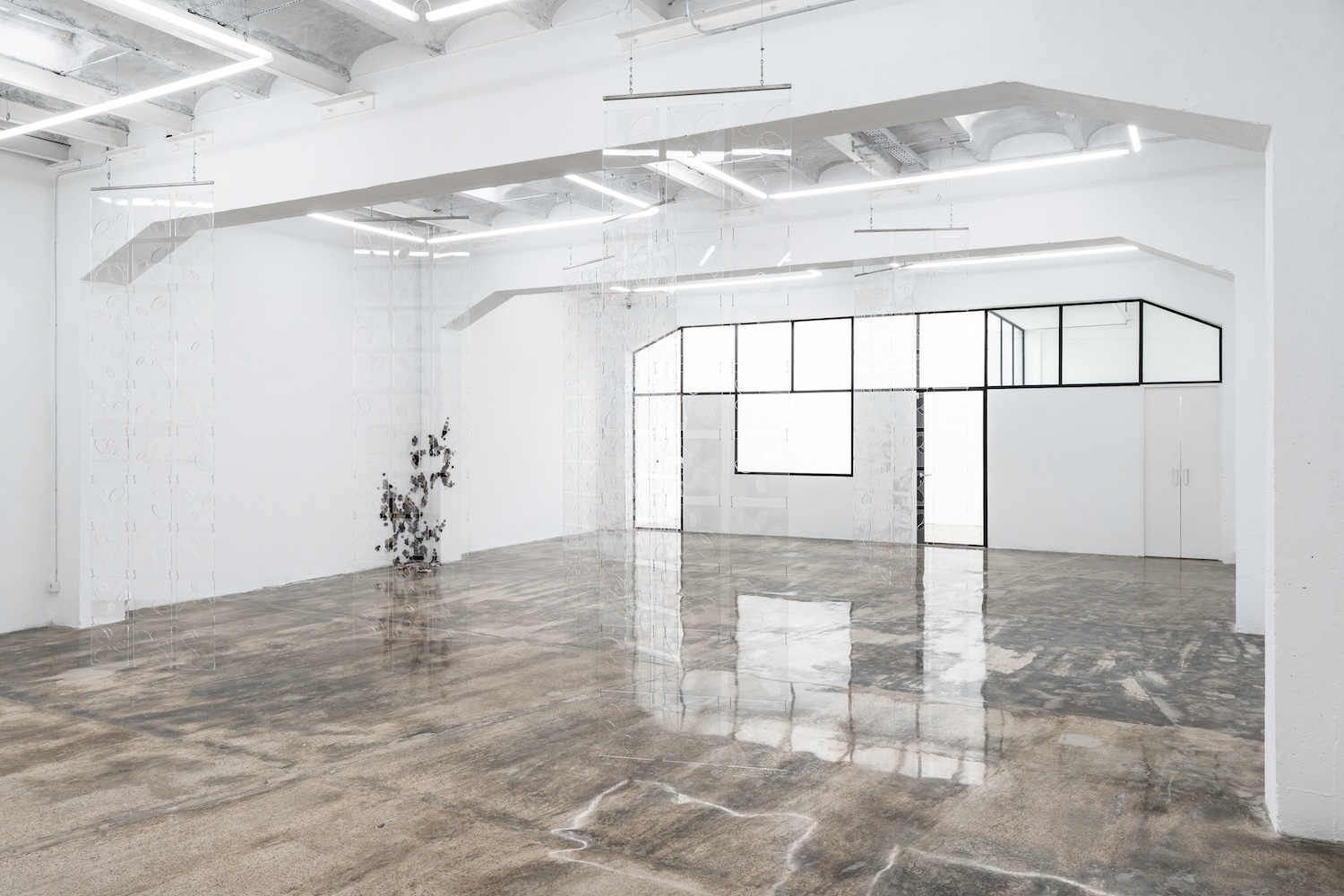
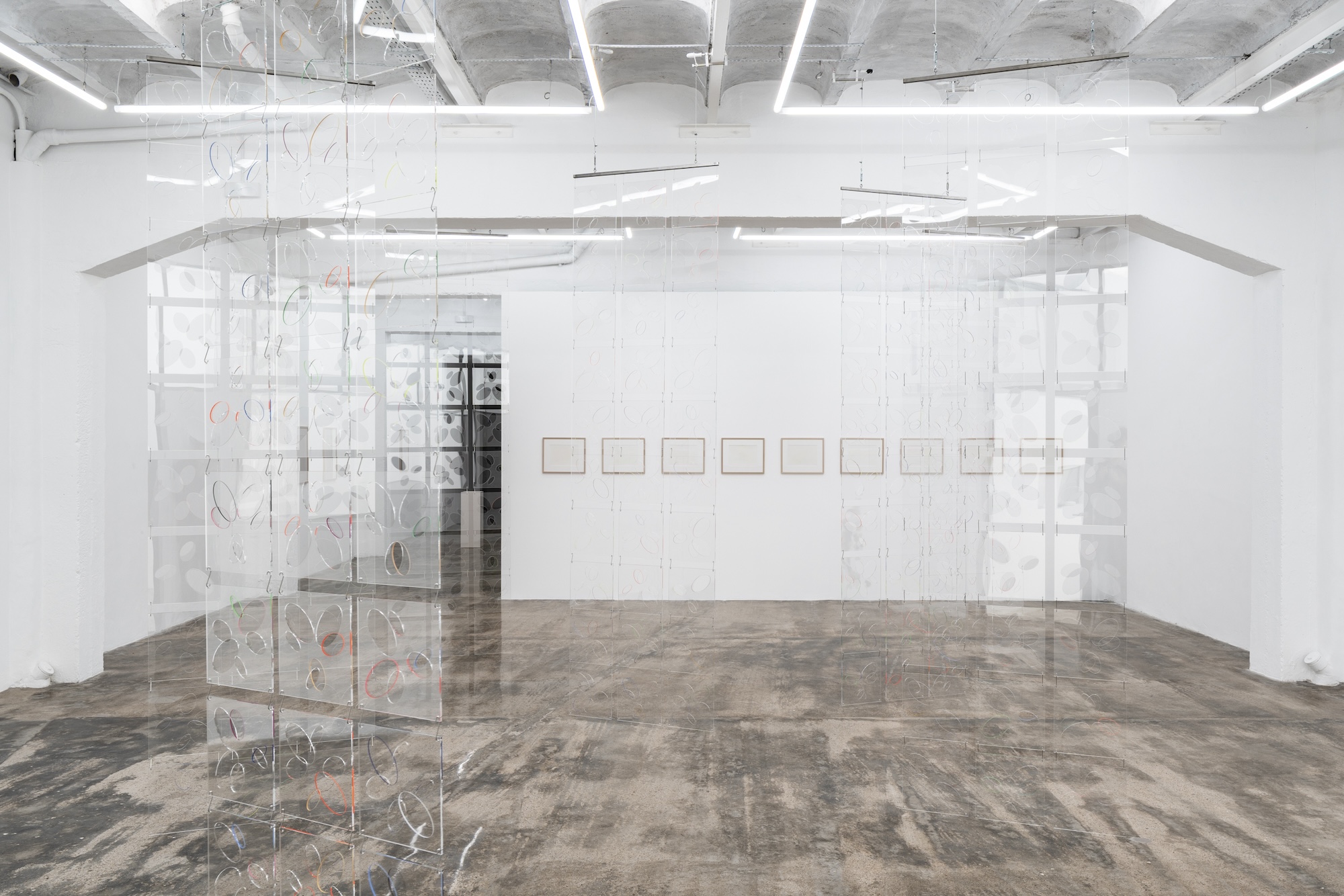
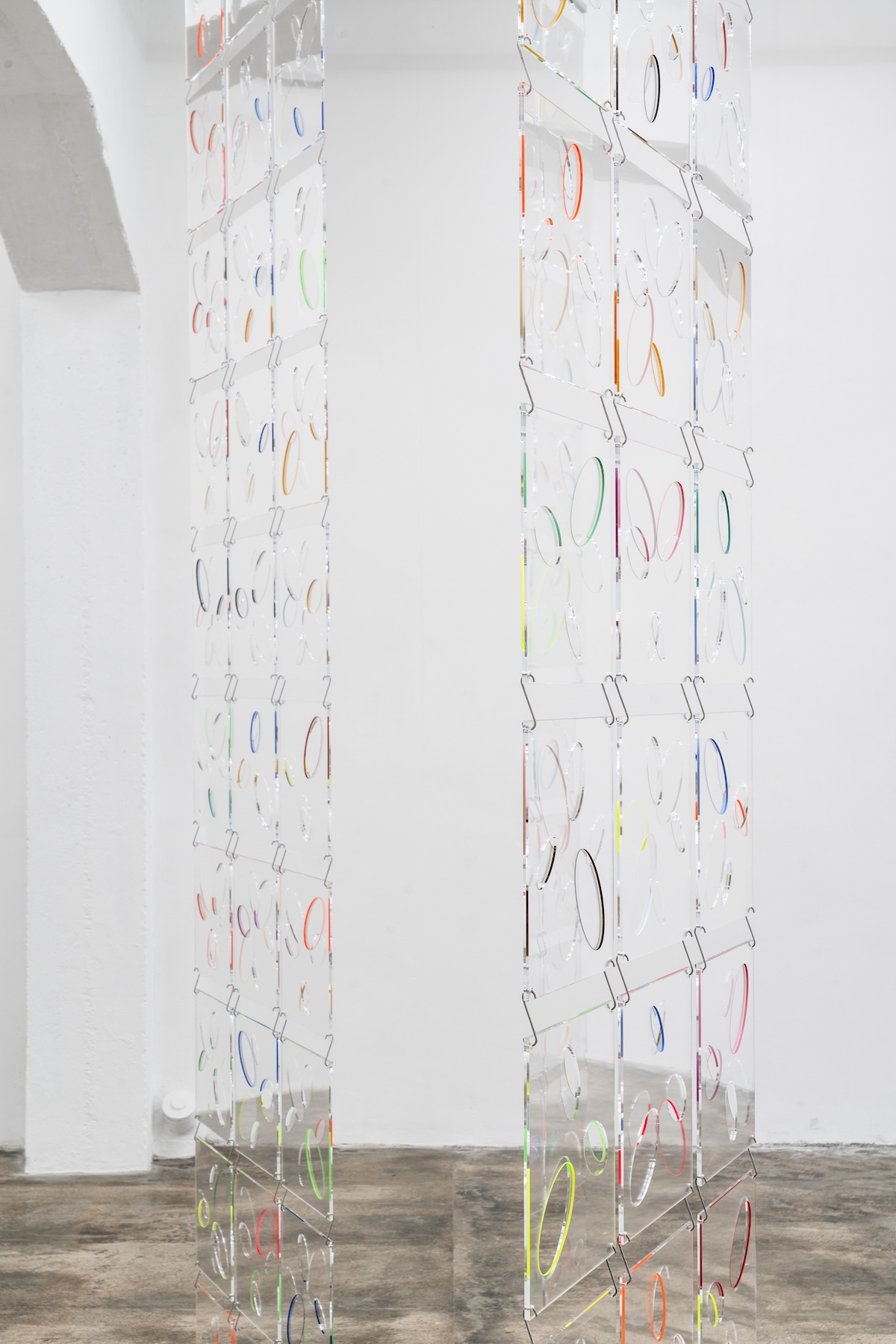
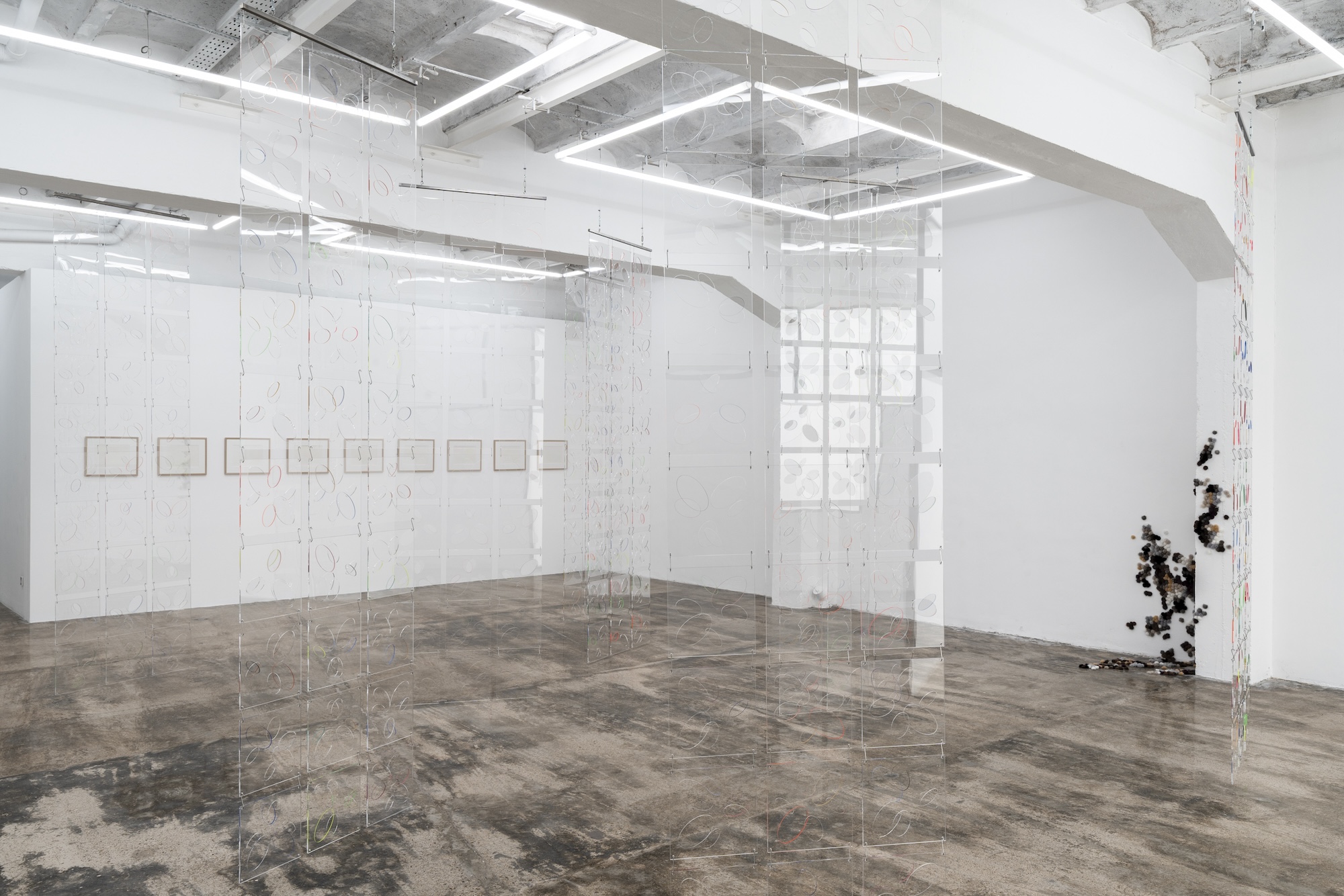
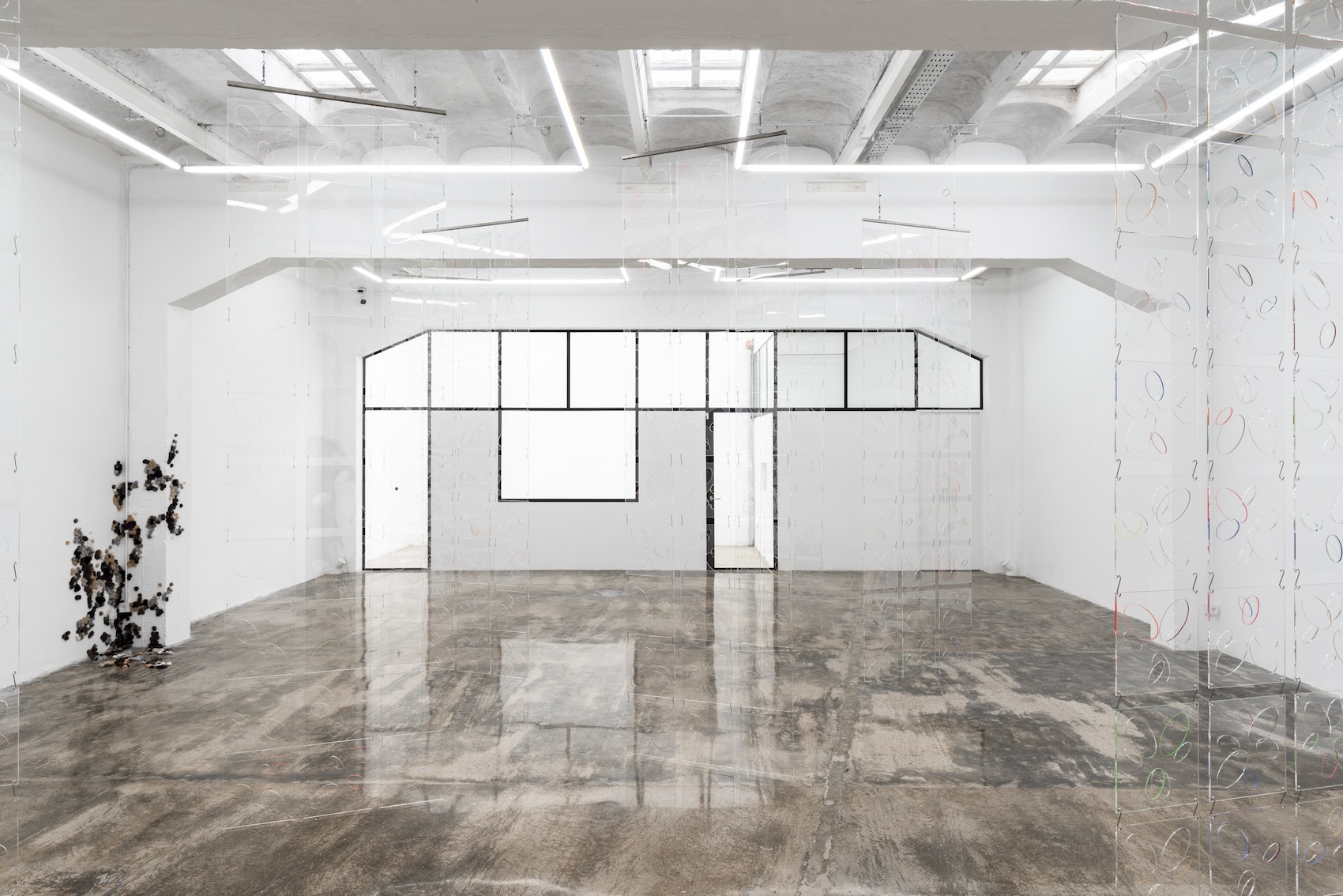
The main space of the gallery holds Ópalo (2026), a series of large translucent hanging screens that completely reconfigures the space. Whereas Arocha and Schraenen usually make use of reflective surfaces, this time they opted for perforated transparent ones, in which only the interior edges have been painted, echoing the chromatic qualities of the opal. The result is a mesmerising visual and spatial experience where the viewer’s vision and movement have to constantly be recalibrated in order to navigate the room. With this gesture, the artists make an image out of the space emphasising its speculative and malleable qualities, while also providing the beholder with a sense of agency. This way of artistically negotiating time and space grounds the viewer in the present, both physically and emotionally, encouraging them to spend time engaging with the work. Dichotomies keep appearing — this time in the form of void/matter and transparency/colour that allow the artists to go deeper in their object of study.
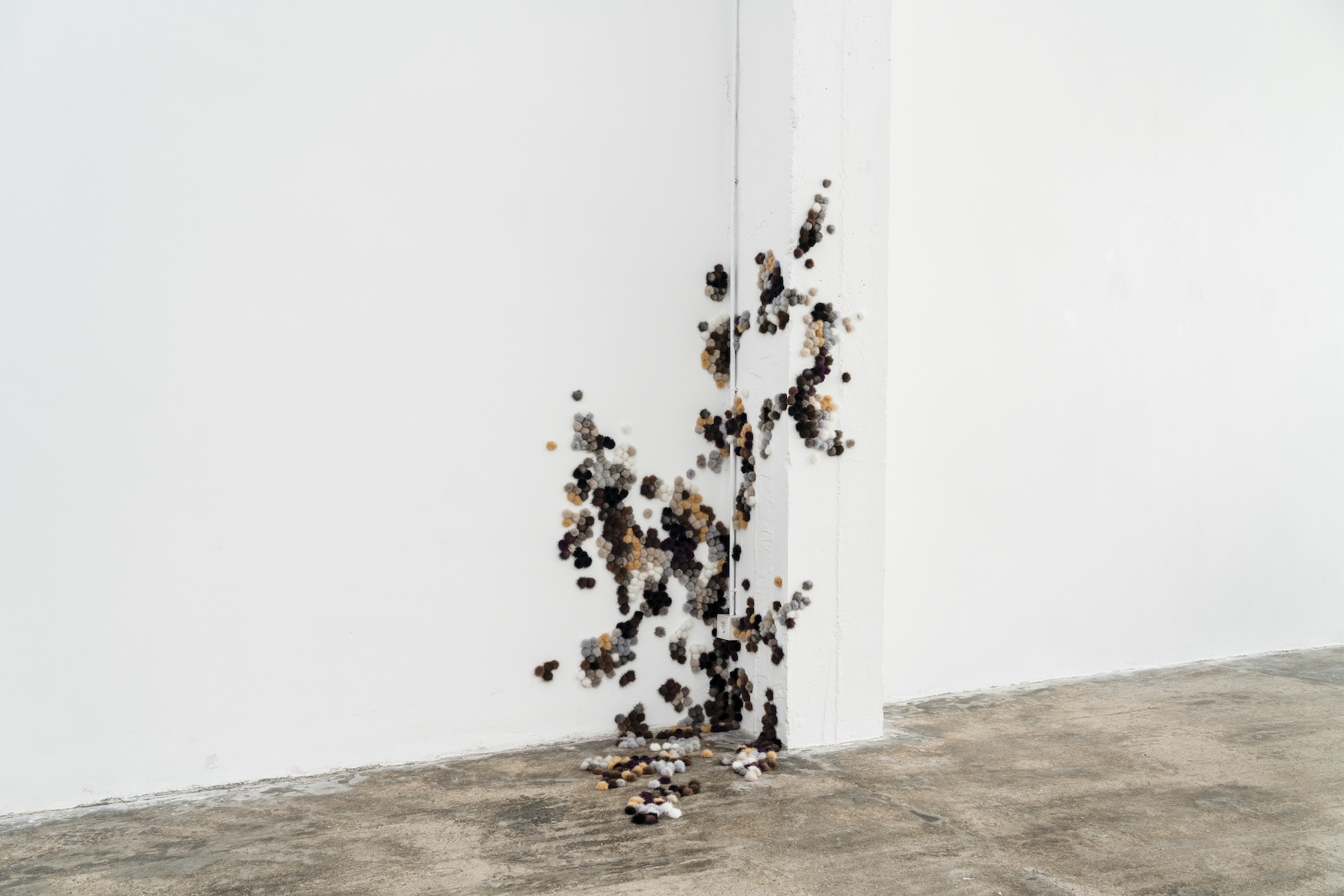
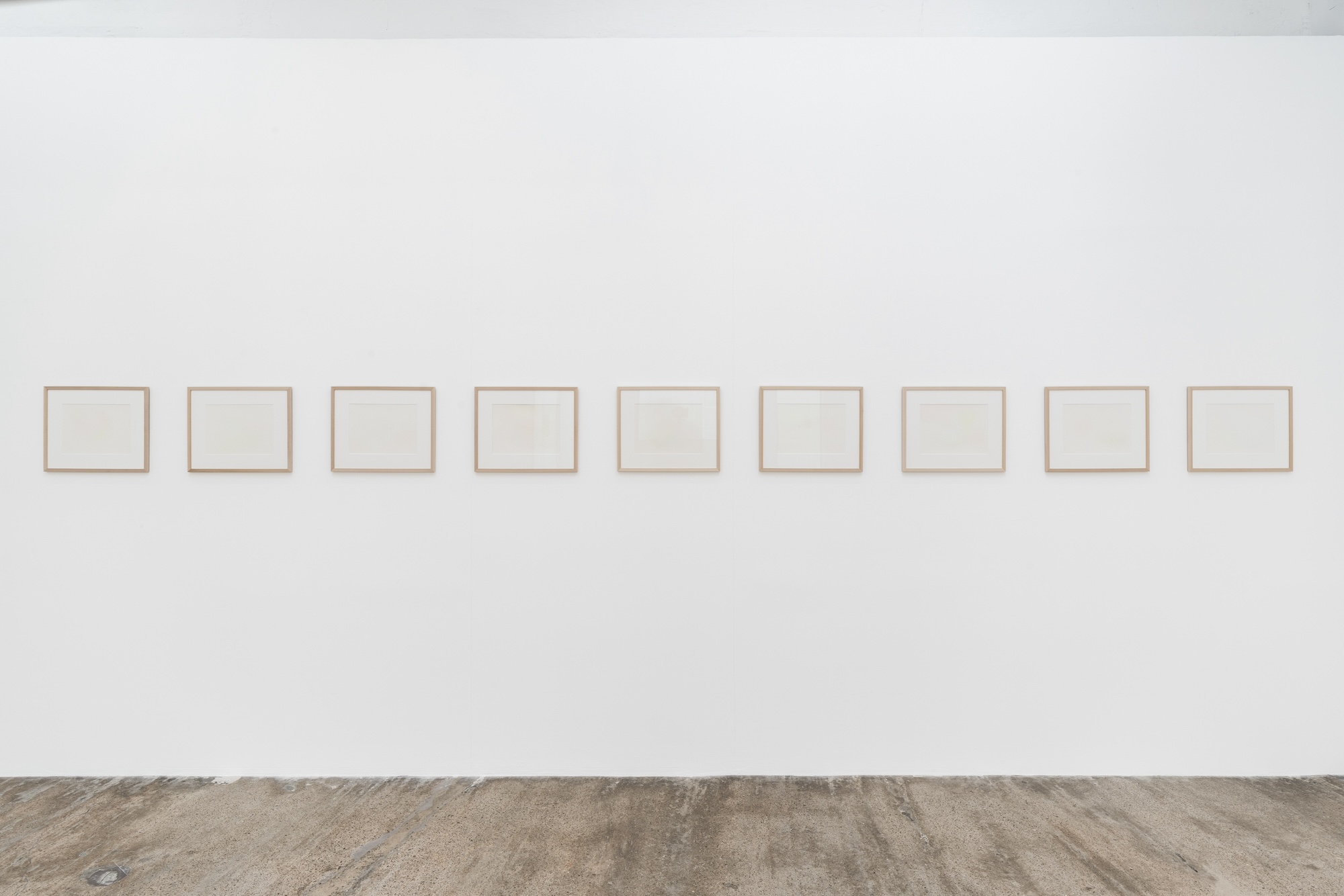
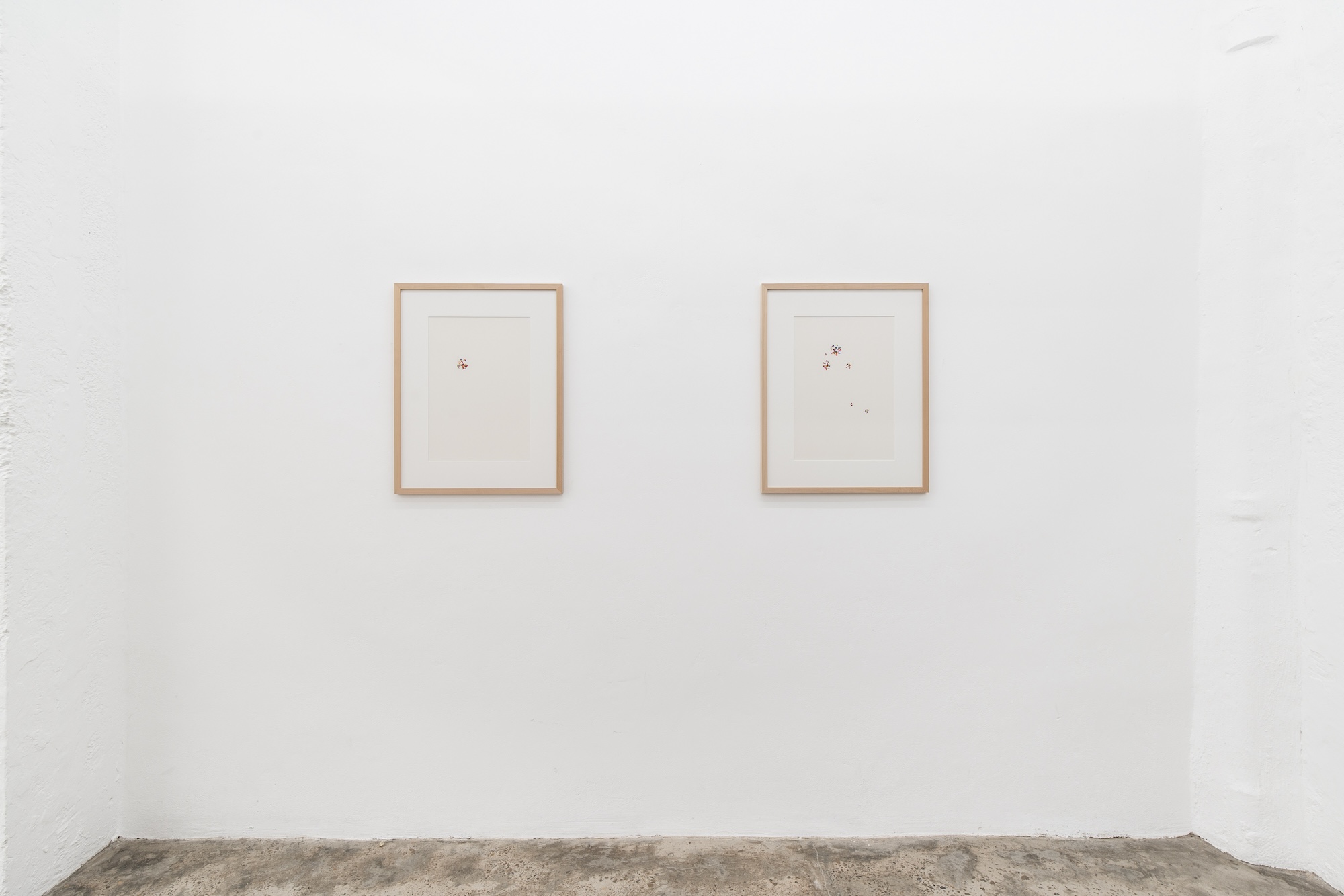
Accompanying the installation Ópalo there is the intriguing Ghost-Fuzz (2026) made out of hundreds of furry mink pompoms spreading through the floor and walls in a fashion that resembles the early-stage mould spores formation. Usually associated with decay and fast propagation, and perhaps here in sharp contrast with the utterly slow formation and stable qualities of the opal, the artists seem to poignantly refer the fragility of social and political constructs that in their precariousness can be easily eroded when certain conditions shift. If Ópalo occupies the main space of the gallery, The Ópalo (Box) (2026) is kind of its opposite version since, as its title indicates, it is contained within a box-like structure. The piece makes use of the same modular plexiglass screens that conform the large installation but this time arranged vertically, one on top of each other, including a mirror at the bottom that automatically incorporates the curious viewer into the equation. The works on paper Opal I, II, III (2026) circumscribe the motif into a two dimensional medium that once again demand us to shift our focus and the way of interpreting the image.
Against the idea that Geometric Abstraction has to be necessarily cold and distant, Carla Arocha and Stéphane Schraenen prove the exact opposite. Behind a scrupulous formalist body of work, the artists place there viewer’s experience at the core of their artistic concerns thus bringing into it notions such as fragility, memory or absence. By disrupting spaces, suspending meaning, and provoking a certain degree of confusion, the artists ask the beholder to make an effort to delve into their minds, for as long as they wish, questioning the reality that surrounds them. Once we realise the artworks are responsive and we have a role in it a whole new dimension of ‘Spinning Rumours Ópalo’ kicks in giving us the opportunity to be affected in ways we had not yet considered.
Carla Arocha and Stéphane Schraenen have extensively exhibited in Europe, US, South Ameri- ca and Asia. Recent exhibitions and projects include: Spinning Rumours Ópalo, galería Fermay (2026), Shadows Know, Jason Haam, Seoul (2025), Bienal de Busan, Korea (2024), 99 – 24 Galerie Parisa Kind, Frankfurt am Main (2024), Floop, galería Fermay (2022), Unvollendet, Galerie Parisa Kind, Frankfurt am Main (2022), Look Out, Galería Maior, Pollença (2019), The Aftermath, Gallery of Fine Arts, Split (2019), Sanguine/ Bloerood, curated by Luc Tuymans (M HKA, Antwerp and Fonda- zione Prada, Milano), Concrete, Parasol Unit, London, UK (2016). Their work is part of institutional and private collections such as MoMA, New York, Chicago Art Institute, Chicago Contemporary Art Museum, Walker Art Center (Minneapolis, US), CAB Burgos, Fundación de Arte Cisneros Fontanals (Miami, EE.UU.) and F.R.A.C. Auvergne, Clermont-Ferrand (FR).
Artist Talk and Book Presentation
20.03.2026 at 7.30pm
The artists will present Carla Arocha and Stéphane Schraenen: Monograph as Project at Es Baluard Museu. The book was edited and authored by curator and art historian Barbara Vanderlinden, with book design by Irma Boom. Expanding the notion of the artist monograph, this richly illustrated study examines both the individual and collaborative practices of Arocha and Schraenen from the 1990s to today. It will be moderated by Antoni Ferrer